Circular economy work happening right now, country by country — entries here stay up and get updated as often as the projects themselves change. Leading it off is Building Bridges Through Rotary, Loopway’s featured circular economy project for the 2026-2027 Rotary Year.
India — Solar Panel Recycling
Jaideep Malaviya, a 35-year veteran of India’s solar industry, helped draft the Indian government’s mandatory solar-panel-recycling regulation (effective April 2022) and has since secured an exclusive Asian license for Lux Chemtech’s (Germany) award-winning panel-recycling technology through his company, Malaviya Solar Energy Consultancy. A first recycling line is set to launch in India, with plans to involve local Rotarians in collecting end-of-life panels.
Read the full feature: India’s Solar Boom Meets Its Waste Problem
River Recycle
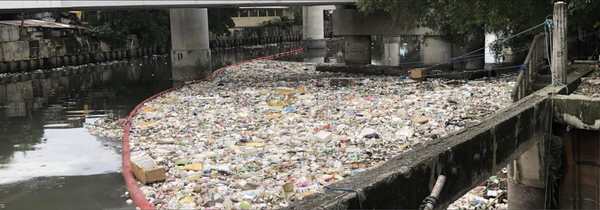
A Finnish environmental technology company (Helsinki, founded 2019) working to stop plastic pollution in the world’s rivers before it reaches the ocean — turning collected plastic into jobs, recycled materials, and finished products across multiple countries.
Where They Operate
Kpeshie Lagoon: 3 collection sites, roughly 24 tons of plastic intercepted per year — about 50 formal jobs plus around 200 informal waste pickers engaged.
River-cleaning and recycling operations including Pasig River collection, feeding local finished-product supply chains such as the Tambay Cycling Hub project.
Up to 4,000 kg/day collection capacity and 330,000+ kg/year recycling capacity — home to the RR Board product line detailed below.
An expansion market for River Recycle, alongside Malaviya Solar Energy’s separate solar-panel recycling work covered above.
Products
Construction- and furniture-grade board made from river-collected bags, bottles, and wrappers. Water- and termite-resistant — used for walls, flooring, pontoons, benches, fencing, and shelving.
Processed, baled PET plastic sold into international recycling supply chains.
Certified collection-verification credits that help fund ongoing river cleanup operations.
Product Spotlight: RR Board — Available in Indonesia
Made from 100% low-value plastic (LVP) — sachets, plastic bags, and food wrappers pulled from Indonesia’s rivers — and sold by Repair Project. Standard panels are 1.2m x 2.4m across three thicknesses, work with standard tools (jigsaw, circular saw, CNC), and are water resistant, anti-mold, and fire retardant.
| Thickness | Weight | Price / sheet | Price / m² |
|---|---|---|---|
| 12 mm | 32 kg | Rp 540,500 | Rp 187,674 |
| 16 mm | 44 kg | Rp 765,500 | Rp 265,799 |
| 10 mm | 28 kg | Rp 405,500 | Rp 140,799 |
Source: Repair Project, Product Catalogue & FAQ, May 2026. Prices exclude tax and shipping.
Netherlands — Modular, Repairable Phones
Fairphone, based in Amsterdam, has spent roughly 16 years proving that consumer electronics don’t have to be disposable. Its modular smartphones are designed to be opened with a simple screwdriver, so batteries, cameras, and screens can be swapped out instead of replacing the whole device — a design approach that has kept close to 1 million phones in use well past the industry’s typical upgrade cycle. The company is a certified B Corporation and holds EcoVadis Platinum status for its supply-chain and sustainability practices. Source: Fairphone company reporting and the B Corporation directory.
Kenya — Fair-Trade Plastic Recycling
Mr. Green Africa, headquartered in Nairobi, buys post-consumer plastic waste directly from informal waste pickers at transparent, above-market prices, then processes it into food-grade recycled plastic pellets for manufacturers. The model has formalized income for thousands of waste pickers who previously earned far less through informal middlemen. The company is a certified B Corporation and has been highlighted by the World Economic Forum and the Circle Economy knowledge hub as a model for inclusive recycling in East Africa. Source: World Economic Forum, B Corporation directory, and Circle Economy.
Chile — Community Recycling Points
TriCiclos, founded in Santiago in 2009, pioneered Chile’s network of staffed “Clean Points” — community recycling stations that sort dozens of material types most haulers won’t touch, from plastic film to used cooking oil. The model has since expanded into Colombia, Peru, and Brazil. TriCiclos was the first B Corporation certified in Chile and one of the first in Latin America, and its founder helped shape the country’s national extended producer responsibility law. Source: B Corporation directory and Rapid Transition Alliance case studies.
Know a circular economy project abroad worth featuring here? Reach out through the Contact page, the same way State Resources listings get submitted today.